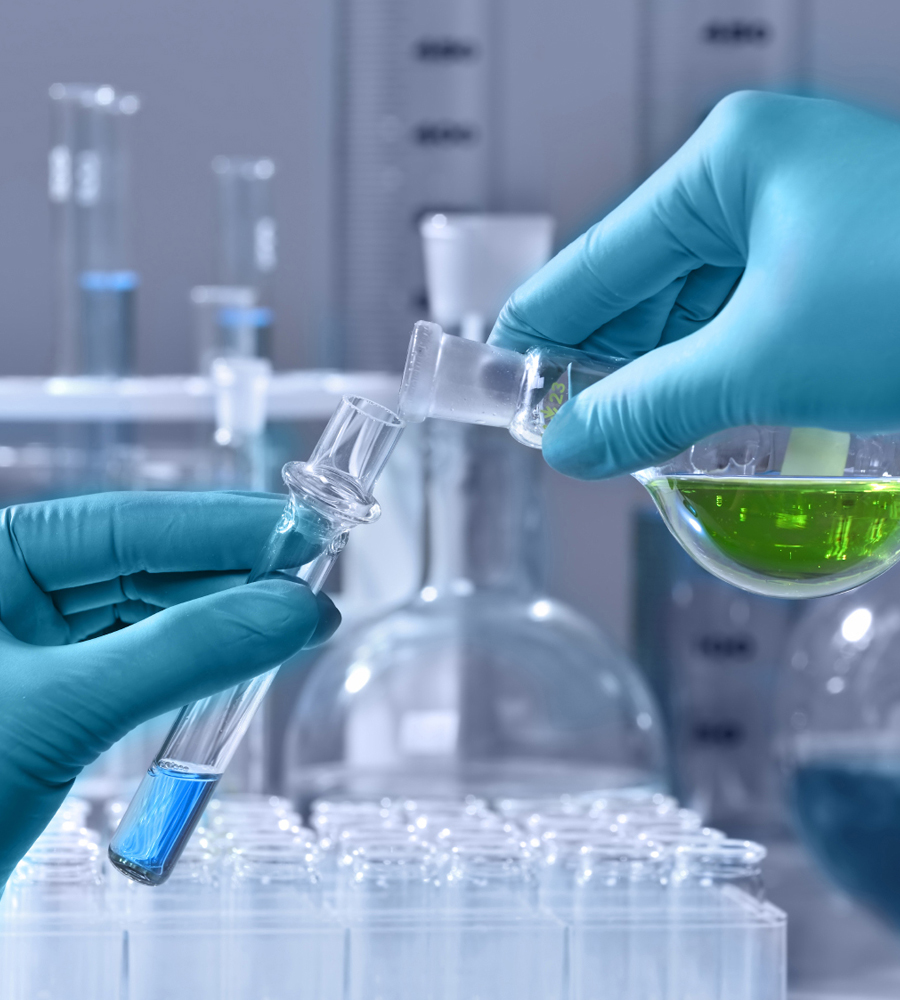


Chemistry Department
The impacts of chemical process occurring in the environment which are impacted by humankind's activities may be felt on a local scale, through the presence of urban cities' air pollutants or toxic substances arising
from a chemical waste site, or on a global scale, through depletion of stratospheric ozone or global warming. The inter science laboratory (ISL) understanding how the uncontaminated environment works, which
chemicals in what concentrations are present naturally, and with what effects. Without this it would be impossible to accurately study the effects humans have on the environment through the release of chemicals.
Inter science laboratory detect and identify the nature and source of pollutants in water quality include dissolved oxygen (DO), chemical oxygen demand (COD), biochemical oxygen demand (BOD), total dissolved
solids (TDS), pH, nutrients (nitrates and phosphorus), heavy metals, soil chemicals (including copper, zinc, cadmium, lead and mercury), and pesticides using classical wet chemistry such as gravimetric, titrimetric
and electrochemical methods. More sophisticated approaches are used in the determination of trace metals and organic compounds. Metals are commonly measured by atomic spectroscopy and mass spectrometry: Atomic
Absorption Spectrophotometry (AAS) and Inductively Coupled Plasma Atomic Emission (ICP-AES) or Inductively Coupled Plasma Mass Spectrometric (ICP-MS) techniques. Organic compounds are commonly measured also
using mass spectrometric methods, such as Gas chromatography-mass spectrometry (GC/MS) and Liquid chromatography-mass spectrometry (LC/MS).