

Environmental Department
An air pollutant is a material in the air that can have adverse effects on humans and the ecosystem. The substance can be solid particles, liquid droplets, or gases. Inter science laboratory (ISL) detect and identify Substances emitted into the atmosphere by human activity include:
- Carbon dioxide (CO2) – Because of its role as a greenhouse gas it has been described as "the leading pollutant"[5] and "the worst climate pollution".
- Sulphur oxides (SOx) – particularly sulfur dioxide(SO2) is produced by volcanoes and in various industrial processes. Coal and petroleum often contain sulphur compounds, and their combustion generates sulphur dioxide.
- Nitrogen oxides (NOx) – Nitrogen oxides, particularly nitrogen dioxide, are expelled from high temperature combustion, and are also produced during thunderstorms by electric discharge. One of the most prominent air pollutants, this reddish-brown toxic gas has a characteristic sharp, biting odor.
- Carbon monoxide (CO) – CO is a colorless, odorless, toxic yet non-irritating gas. It is a product of combustion of fuel such as natural gas, coal or wood. Vehicular exhaust contributes to the majority of carbon monoxide let into our atmosphere.
- Volatile organic compounds (VOC) – VOCs are a well-known outdoor air pollutant. They are categorized as either methane (CH4) or non-methane (NMVOCs). Methane is an extremely efficient greenhouse gas which contributes to enhanced global warming.
- Particulates, alternatively referred to as particulate matter (PM), atmospheric particulate matter, or fine particles, are tiny particles of solid or liquid suspended in a gas.
- Persistent free radicals connected to airborne fine particles are linked to cardiopulmonary disease.
- Toxic metals, such as lead and mercury, especially their compounds.
- Chlorofluorocarbons (CFCs) – harmful to the ozone layer.
- Ammonia (NH3) – emitted from agricultural processes.
- Odours — such as from garbage, sewage, and industrial processes.
- Radioactive pollutants – produced by nuclear explosions, nuclear events, war explosives, and natural processes such as the radioactive decay of radon.

Noise monitoring
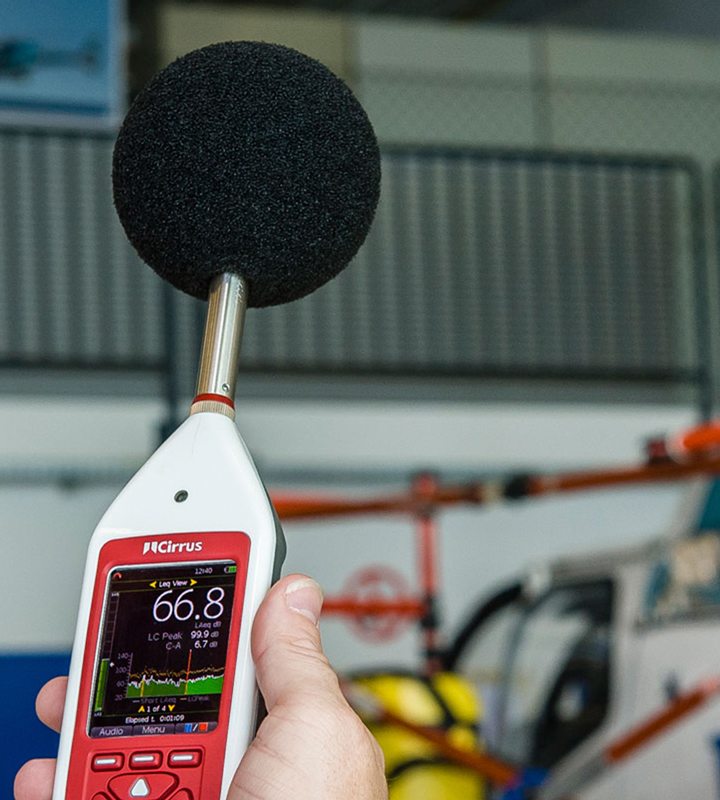
Noise at work can lead to temporary or permanent hearing loss. However, hearing loss is not the only problem caused by noise; tinnitus (ringing, whistling, buzzing or humming in the ears) may also occur. Noise can also create stress and can be a safety hazard at work, interfering with communication and making warnings harder to hear. Inter Science Laboratory (ISL) employ qualified and experienced ‘competent’ team to carry out comprehensive noise assessments. We are able to identify workers at risk from hearing damage by carrying out personal exposure measurements using personal dosimetry techniques. Assessment of the overall risk to hearing can then be undertaken. The employer to reduce noise at source.As such, our assessments allow for:
- Determination of ambient noise levels
- Investigation and identification of significant noise sources in the workplace
Use of hearing protection is the last line of defence against noise, and should never be used as the primary protection method in noisy environments.